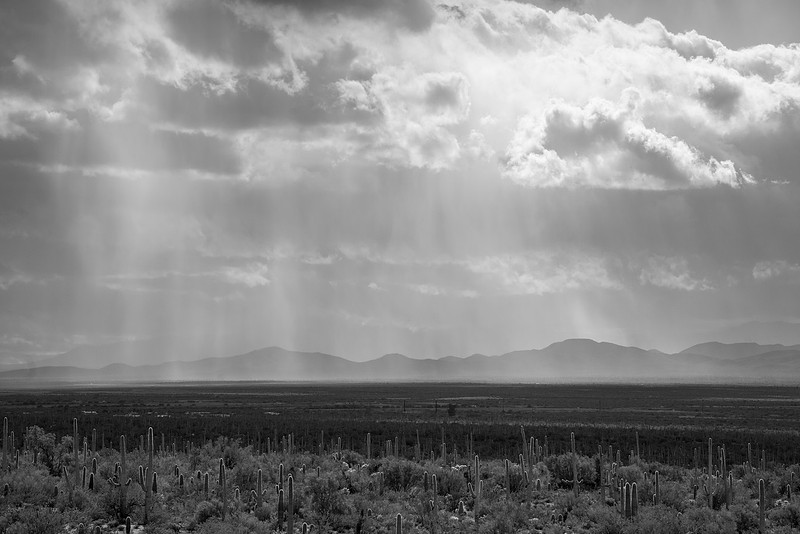
Among the Saguaros
There are some landscapes that feel familiar almost immediately. And then there are landscapes that make you feel like you’ve landed on another planet.
Saguaro National Park was the latter.
Melissa and I traveled to Arizona for a friend’s wedding in Phoenix, and whenever we’re traveling somewhere new, I have a hard time simply flying in for the thing we came for and flying home again. So we arrived a couple of days early, rented a car, and gave ourselves some time to explore.
One of those days took us south, toward Tucson and Saguaro National Park.
Coming from Maine, I’m accustomed to landscapes defined by water and trees. Dense forests. Rocky coastlines. Mountains covered in spruce and fir. Places where green fills nearly every empty space.
The Sonoran Desert asks you to look differently.
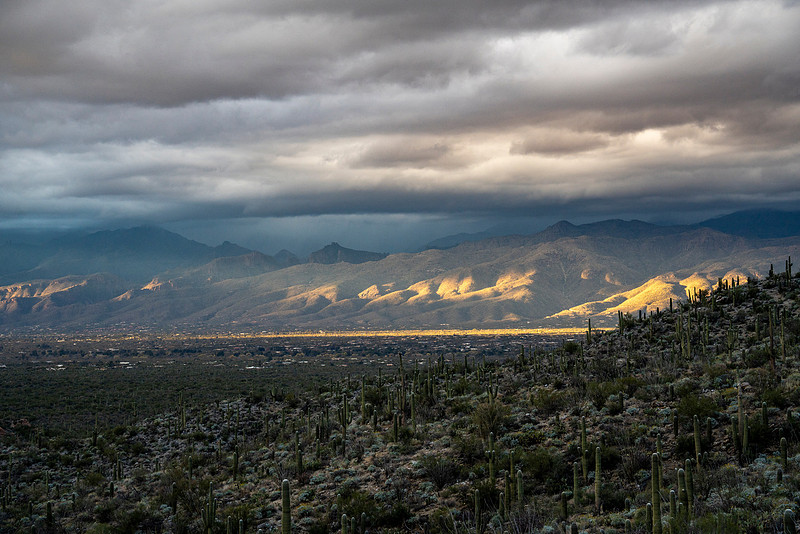

At first glance, the landscape feels sparse. There’s so much open space between things. The mountains stretch out in the distance, the earth takes on shades of tan and rust, and nearly everything growing from it seems to have evolved some elaborate way of defending itself.
But spend a little time there and the emptiness disappears.
The desert is absolutely full of life.
Saguaros rise above everything else, sometimes standing alone and sometimes stretching across the landscape by the hundreds. Prickly pear and cholla fill the spaces below them. Birds move between cactus arms. Tiny flowers and unexpected flashes of color appear against what, from a distance, can look like nothing more than rock and sand.
And the saguaros themselves are extraordinary.
They grow only in the Sonoran Desert, and they grow incredibly slowly. According to the National Park Service, a saguaro may grow only an inch or an inch and a half during its first eight years. They typically don’t begin growing their iconic arms until somewhere around 50 to 70 years old, and some live for more than 200 years.
Standing among them changes the way you see them.
They stop looking like symbols of the American Southwest and start looking like individuals.
Some are tall and perfectly straight. Others have two arms, five arms, ten arms. Some twist in strange directions or carry the scars of decades spent surviving heat, drought, storms and everything else the desert has thrown at them.
There is something wonderfully imperfect about them.
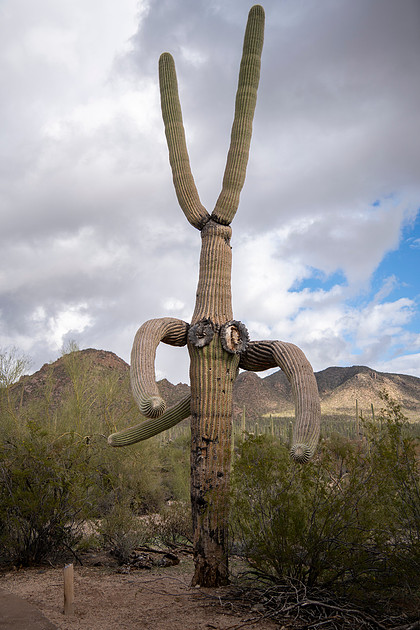
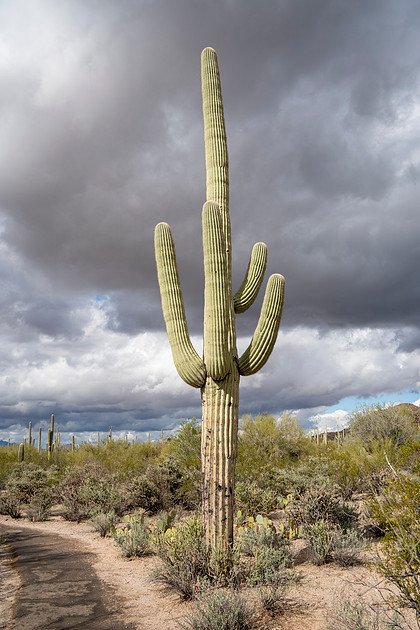
That individuality is also what made Saguaro such an interesting place to photograph.
Photography has always been one of the ways I slow myself down enough to really see a place. When I have a camera in my hand, I start noticing relationships I might otherwise walk past: the way one cactus overlaps another, the repetition of shapes across a hillside, the contrast between something impossibly green and the muted earth surrounding it.
Saguaro National Park gives you an almost endless supply of those moments.
There’s also something about the scale of the place that photographs struggle to capture. A saguaro can reach around 40 feet tall, but even these enormous plants can look tiny against the mountains and the vastness of the desert.
Then you walk up to one and realize you’re standing beside a living thing that may have been growing there for longer than anyone you have ever known has been alive.
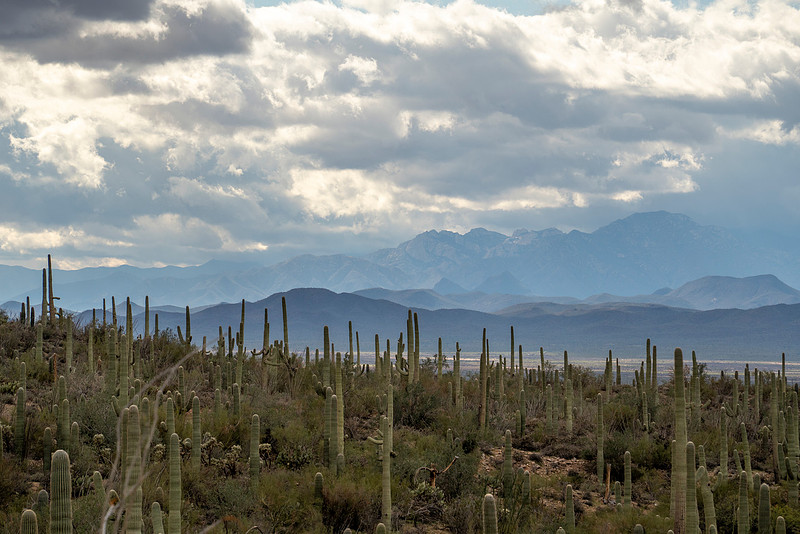
That sense of time stayed with me.
I spend a lot of my life thinking about our relationship with the natural world, and national parks have a way of making that relationship tangible. Saguaro exists in large part because people decided this particular ecosystem, and the life within it, was worth protecting.
And there is a lot here worth protecting.
Saguaros provide food, water and shelter for an enormous range of desert wildlife. Their flowers feed birds, bats and insects. Birds carve nesting cavities into their trunks. Their fruit has sustained people for generations. The saguaro is also culturally significant and sacred to the Tohono O’odham people, whose relationship with these plants long predates the boundaries of a national park.
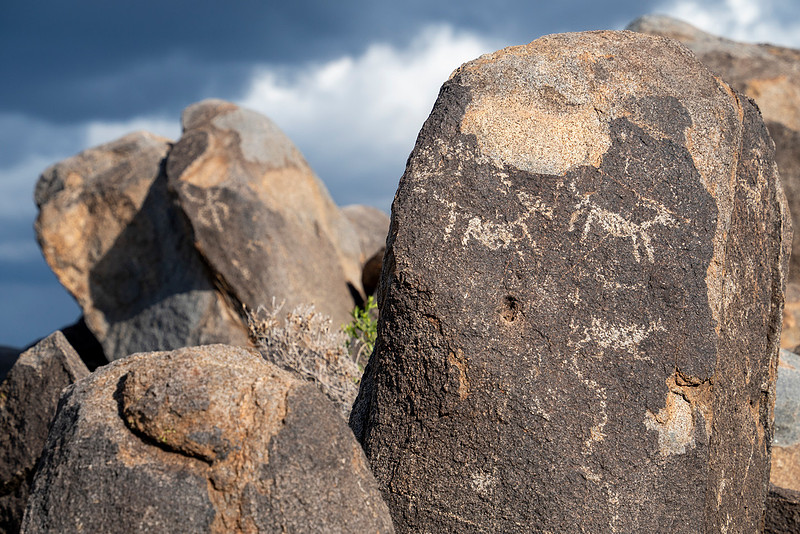
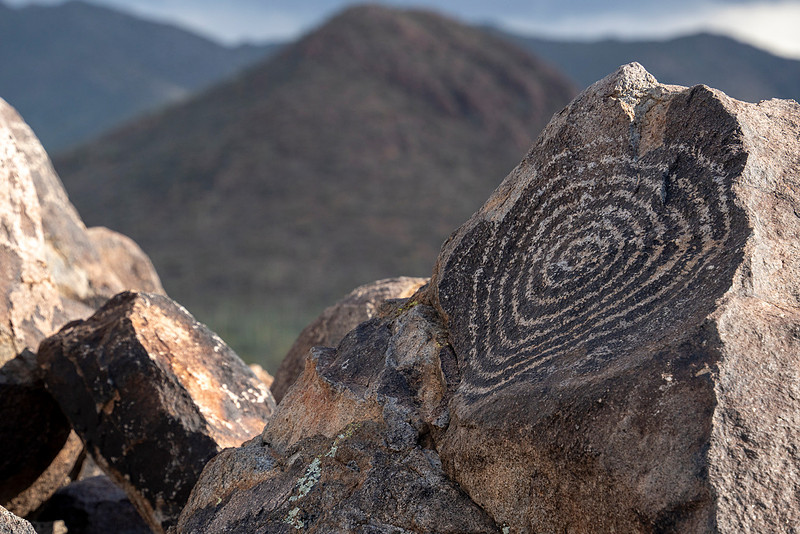
They aren't scenery.
They're part of a community.
Maybe that is what I loved most about photographing this place. The longer we spent there, the less the desert felt like a collection of isolated plants scattered across an empty landscape. Everything belonged to something larger.
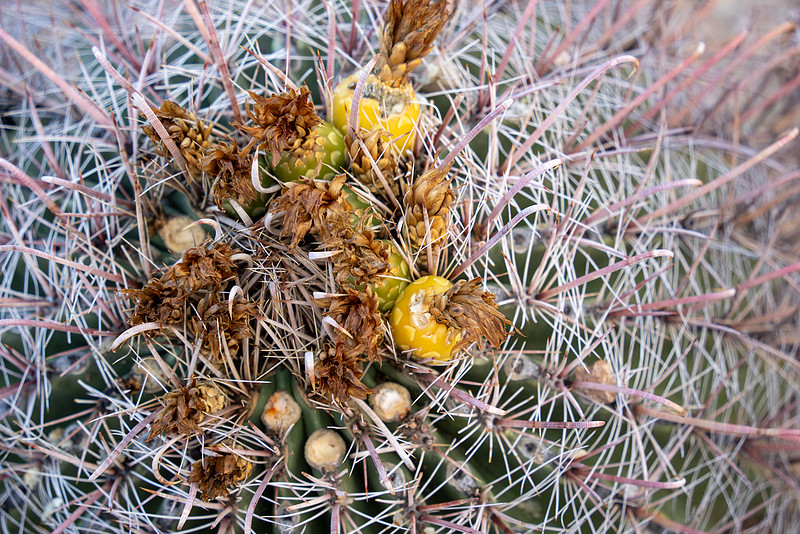
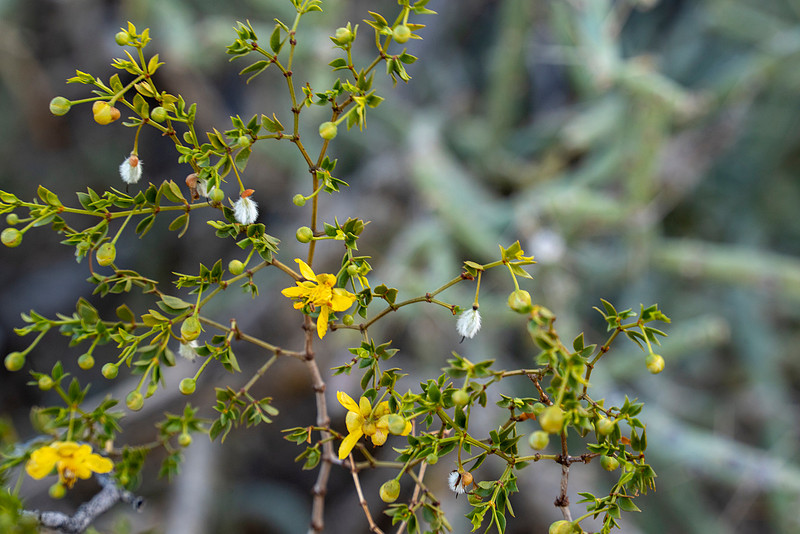
Our trip to Arizona was ultimately about celebrating people we care about. Saguaro was the adventure we tucked around the edges of that celebration.
And those extra days of exploring are such a gift and leave such a profound impact on me.
They give Melissa and me a chance to wander somewhere we’ve never been, learn a landscape together, pull over because something caught our attention, and spend a little while being curious about a corner of the world that looks nothing like home.
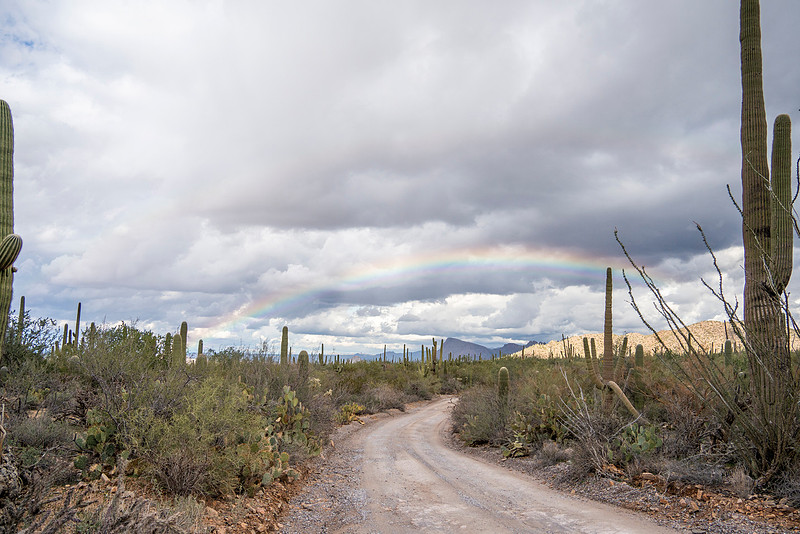
And this one really looked nothing like home.
Thousands of miles from Maine, standing beneath giant cacti in the Sonoran Desert, I found myself experiencing one of my favorite things about being outside:
That feeling of being reminded just how many different ways there are for a landscape to be alive.